Contents:
- What Was the White Rose Movement? (Direct Answer)
- Origins: Students, Flyers, and a Flower
- The Meaning of the White Rose: Symbolism Spanning Generations
- Purity and Peace
- Courage in Defiance
- The White Rose in Modern Floristry and Memorials
- Memorial Tributes
- Protests and Public Art
- Florists’ Perspective
- White Rose Movement vs. Other Symbolic Flowers
- Lessons from the White Rose: Moral Courage in Everyday Life
- FAQ: The White Rose Movement and Its Meaning
- What did the White Rose Movement stand for?
- Why did they choose the white rose as their symbol?
- Are white roses still used as protest symbols in the US?
- Who were the main leaders of the White Rose Movement?
- Can I order “White Rose Movement” arrangements in the US?
- Honoring Courage: How to Carry the White Rose Forward
The White Rose Movement and Its Meaning
On a cold February morning in 1943, Munich university students scattered leaflets urging Germans to resist Hitler’s regime. These pages, fluttering across campus, gave birth to the White Rose Movement–one of World War II’s most courageous acts of floral-inspired resistance. Today, white roses still symbolize purity and defiance around the world, far beyond their familiar role in wedding bouquets.
What Was the White Rose Movement? (Direct Answer)
The White Rose Movement was a non-violent resistance group formed by students and a professor at the University of Munich, Germany, in 1942-1943. They anonymously distributed pamphlets calling for opposition to the Nazi government, using the white rose as a symbol of purity and peace. The group’s leaders included siblings Hans and Sophie Scholl, who were arrested and executed for their activism. In modern times, the story of the White Rose Movement stands for moral courage, intellectual resistance, and the enduring power of symbols like the white rose.
Origins: Students, Flyers, and a Flower
Munich, 1942. While much of Europe faced occupation, a small group of German students decided silence was complicity. Led by Hans Scholl (24) and his sister Sophie (21), along with Christoph Probst, Willi Graf, Alexander Schmorell, and their philosophy professor Kurt Huber, the White Rose group risked everything to speak out. Over just nine months, they managed to print and distribute six anti-Nazi leaflets–estimated at 6,000-9,000 copies per pamphlet run, according to WWII historian Dr. Erika Bornstein (PhD, University of Chicago).
Why a white rose? The flower had been associated with innocence and rebirth in European folklore for centuries. The students adopted it as a silent message: resistance can be both beautiful and peaceful.
Key facts:
- Founded: June 1942, University of Munich.
- Active members: 5 core students, 1 professor.
- Duration: Less than 1 year.
- Notable document: “Leaflets of the White Rose.”
The Meaning of the White Rose: Symbolism Spanning Generations
Purity and Peace
White roses have, for centuries, been linked to purity, innocence, and peace. In the language of flowers (floriography), a white rose signals new beginnings or a pure heart. The White Rose Movement amplified this meaning by placing the bloom at the center of moral resistance.
Courage in Defiance
The group’s use of the white rose shifted its meaning, at least in Europe and North America. No longer just for wedding aisles and sympathy arrangements, white roses began to signal:
- Peaceful resistance
- Moral clarity
- Personal sacrifice for a greater good
Today, the white rose is commonly seen at memorials connected to human rights, and in various protests advocating non-violence–echoing the Munich students’ intent.
“The white rose is not just a flower; it is a quiet demand for justice, even when it comes at a price,” notes Elise Morgan, head designer at Brooklyn’s Wildflower Florist and a frequent contributor to the American Florists Review (2026).
The White Rose in Modern Floristry and Memorials
Memorial Tributes
Across the US, white roses are now a staple at ceremonies remembering the Holocaust–and increasingly, at broader human rights commemorations. The National WWII Museum in New Orleans orders roughly 2,500 white roses each January for annual remembrance services. Many survivors’ families prefer a single white stem, symbolizing both loss and hope.
Protests and Public Art
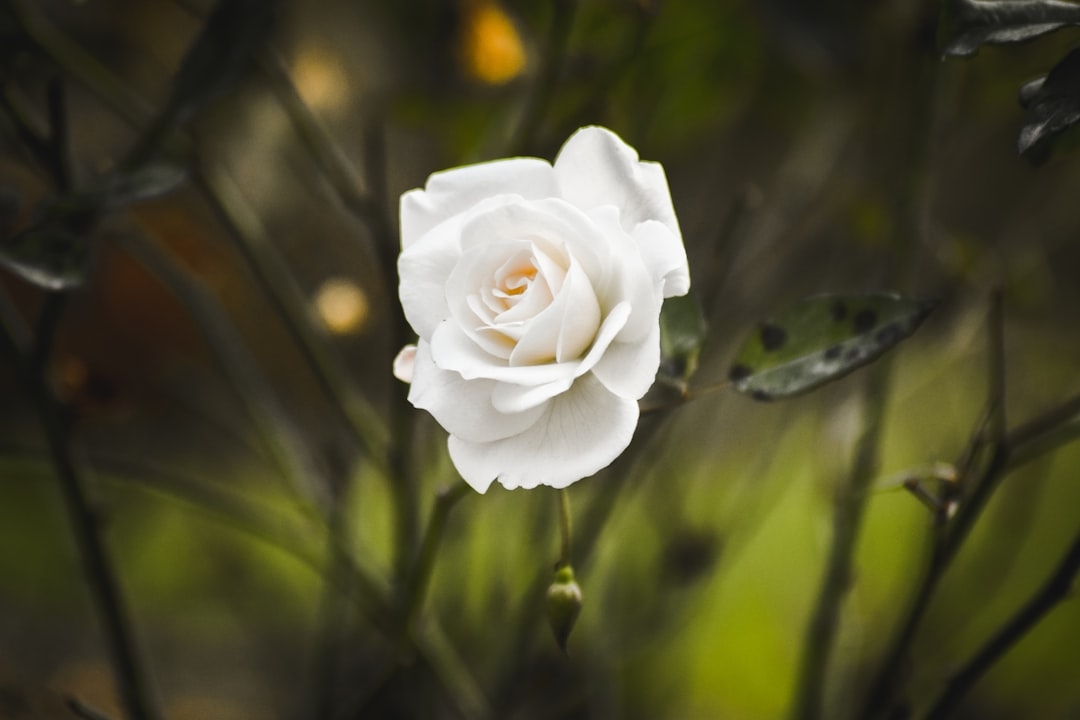
In 2026, social justice organizations in cities like Los Angeles, New York, and Chicago have adopted the white rose during peaceful demonstrations–placing thousands along courthouse steps or in public art installations. The symbolism travels well: simple, photogenic, powerful.
Florists’ Perspective
According to Janelle Rivera (owner, Seattle Blooms), “White rose requests spike around both Holocaust Remembrance Day and local human rights rallies. We always stock extra–if you run out, customers will ask why.”
Average retail pricing in 2026:
- Wholesale: $0.95-$1.20 per white rose stem (Miami Floral Wholesalers, 2026)
- Retail: $3-$5 per stem at US flower shops, higher for custom arrangements
White Rose Movement vs. Other Symbolic Flowers
Here’s a quick comparison of flowers famously used as symbols of resistance or remembrance:
| Flower | Movement/Context | Meaning | Common US Use (2026) |
|---|---|---|---|
| White Rose | The White Rose Movement | Purity, non-violent resistance | Memorials, protests |
| Red Poppy | Remembrance Day (WWI/II) | Sacrifice, remembrance | Veterans’ Day, schools |
| Yellow Daisy | Peace Movements (1960s) | Friendship, optimism | Peace rallies, daisy chains |
| Carnation (Red) | Portuguese Revolution | Democratic change | Cultural events |
Pull-quote:
“Whether in bouquets or in history books, the white rose stands for the quiet bravery of saying ‘no’ to injustice.” – Dr. Marsha Lin, historian, Columbia University
Lessons from the White Rose: Moral Courage in Everyday Life
The legacy of the White Rose Movement goes beyond World War II textbooks. In 2026, the movement’s story is taught in over 12,000 American high schools (US Dept. of Education, 2026). It’s not just about what happened in Germany, but what can happen anywhere when ordinary people decide to take a stand–even if it’s risky, or if they stand alone.
Everyday applications:
- Teachers: Use white roses as a classroom visual for lessons on ethics.
- Community leaders: Incorporate white rose imagery in campaigns for non-violence.
- Florists: Offer “White Rose Movement” bouquet specials on appropriate holidays or during awareness weeks.
For those seeking meaningful floral gifts, a single white rose–plain, unadorned–can be a powerful gesture.
FAQ: The White Rose Movement and Its Meaning
What did the White Rose Movement stand for?
The White Rose Movement stood for peaceful, moral resistance against the Nazi regime during WWII. Its members advocated for human dignity, freedom of speech, and intellectual opposition to tyranny, symbolized by the white rose.
Why did they choose the white rose as their symbol?
The group chose the white rose because it symbolized purity, innocence, and non-violent protest. The flower’s traditional associations made it a subtle but powerful emblem of their cause.
Are white roses still used as protest symbols in the US?
Yes, in 2026, white roses are regularly used at memorials and peaceful protests across the US, especially in events connected to civil rights or Holocaust remembrance.
Who were the main leaders of the White Rose Movement?
The core leaders were Hans and Sophie Scholl, Christoph Probst, Willi Graf, Alexander Schmorell, and Professor Kurt Huber from the University of Munich.
Can I order “White Rose Movement” arrangements in the US?
Absolutely. Many US florists and online services like 1-800-Flowers and UrbanStems offer custom white rose arrangements. Some shops, especially in major cities, feature themed bouquets for memorial days or awareness events.
Honoring Courage: How to Carry the White Rose Forward
Bravery blooms in quiet places. Buying a single white rose for a friend, wearing one at a rally, or sending a bouquet with a handwritten note of support–these small acts echo the original movement’s spirit. In a world still seeking peace and justice, the white rose remains more than a flower. It’s a living symbol, ready for new hands to carry it onward.
Feeling inspired? Next time you visit your local florist, ask about the story behind the stems. You might find the white rose means more than you ever imagined.